Phở: from northern Vietnam to your bowl
Explore the northern roots of phở, its journey south and the details that make every bowl personal.
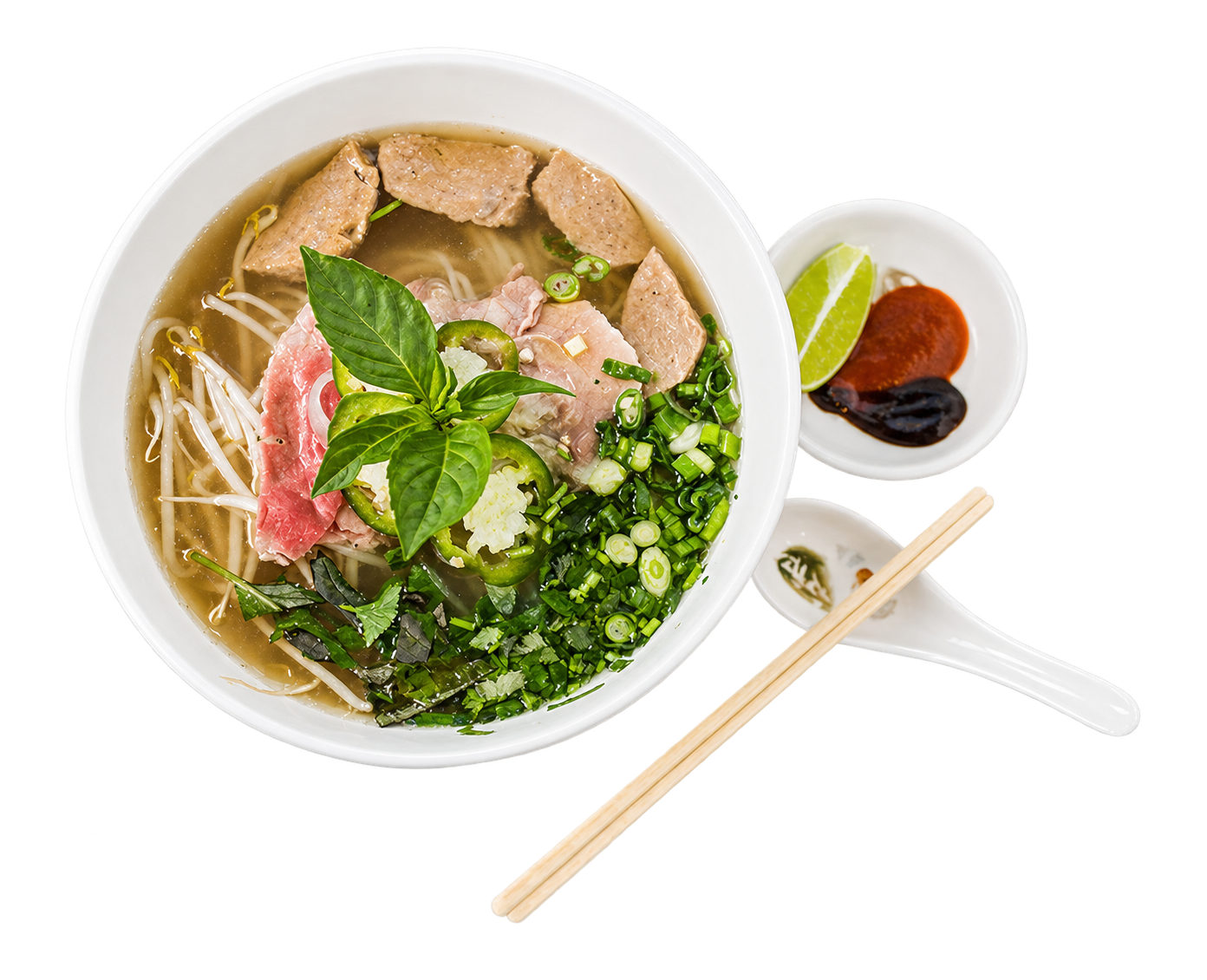
A bowl of phở can feel wonderfully simple: warm broth, soft rice noodles, herbs and a few carefully chosen toppings. Its history is more layered. Before it became a familiar name on restaurant menus around the world, it was part of everyday life in northern Vietnam.
Northern roots, many influences
Nam Định, in the Red River Delta, is widely associated with the early development of beef phở. Hanoi became another essential center of its story. There is no single, universally agreed account of its invention: the dish took shape as ingredients, cooking habits and communities met around the late nineteenth and early twentieth centuries.
French colonial demand made beef more available, while Vietnamese and Chinese cooks contributed to the evolving food culture. By the 1930s, itinerant phở sellers carrying their equipment on shoulder poles were a familiar presence in Hanoi. A nourishing street meal became a shared ritual.


A bowl travels south
Migration after the division of Vietnam in 1954 helped carry phở south. Southern cooks developed a style with more accompaniments and often a sweeter broth; northern versions are generally more restrained. Neither is the only correct bowl. These differences are part of what makes the dish so expressive.
The foundations remain recognizable: rice noodles, a fragrant broth and the relationship between the soup and its finishing ingredients. Beef and chicken versions offer different starting points. Herbs, citrus and sauces let each diner make small adjustments without losing the character of the bowl.
Getting to know your bowl at Pho Viet
The Pho Viet menu introduces several ways to explore that balance. Alongside beef and chicken choices, it lists vegetable or tofu phở, seafood options and specialties such as oxtail. Its published description highlights a broth made with farm-sourced vegetables and served with bean sprouts, basil, coriander, lemon and jalapeños.
For a first visit, try the broth before adding condiments. Then explore the accompaniments a little at a time. Ask the team about the available combinations and ingredients when you order, especially if you have an allergy or a dietary preference. The menu is a starting point for choosing your own bowl, rather than a test of having to order it one particular way.